What Is Photobiomodulation?
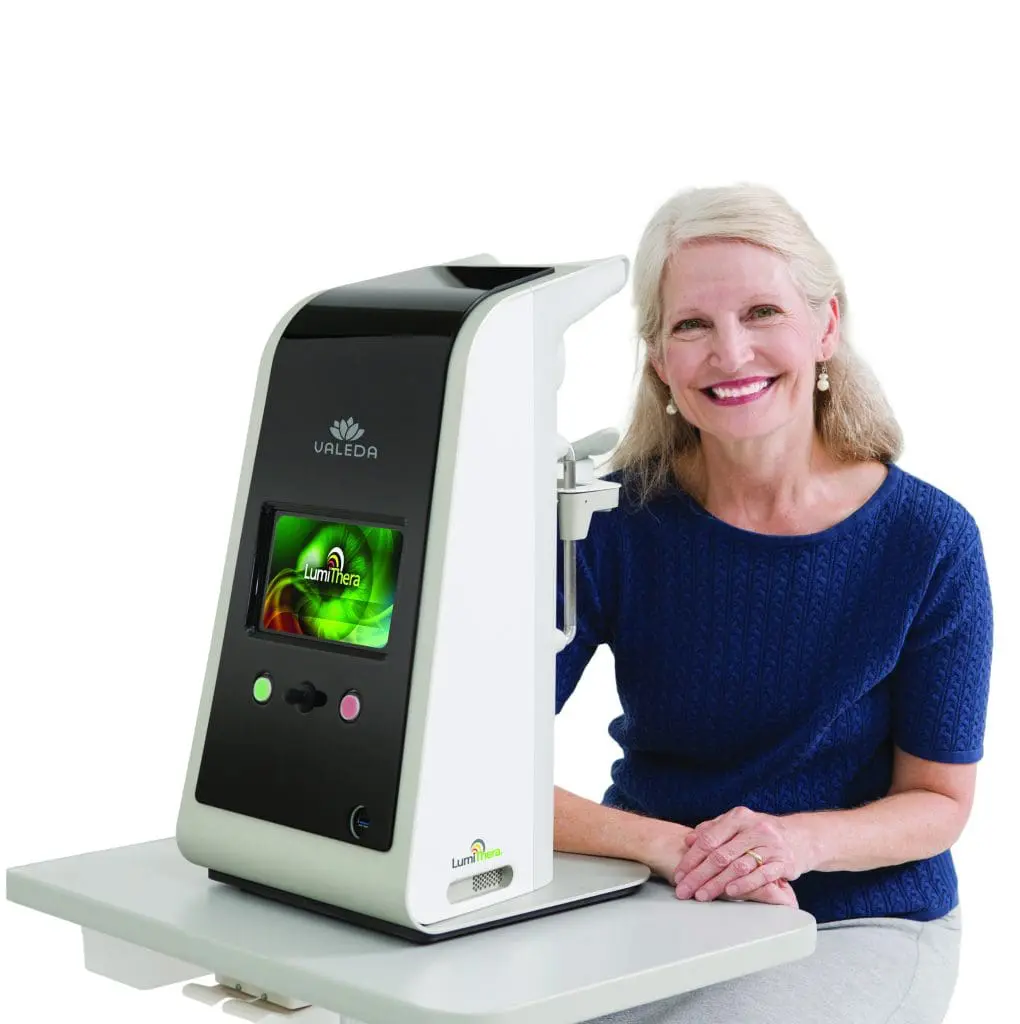
Photobiomodulation, also called PBM, uses carefully selected wavelengths of light to support the natural function of cells. Valeda delivers amber, red, and near-infrared light to the retina.
These wavelengths help stimulate the mitochondria, which produce the energy cells need to function. By supporting cellular energy production, Valeda is designed to improve retinal cell health and visual function in certain patients with dry AMD.
Who May Be a Candidate for Valeda?
Valeda is intended for certain patients who have been diagnosed with dry age-related macular degeneration. A patient may be considered for treatment when an examination and retinal imaging show qualifying changes such as drusen or certain forms of non-central geographic atrophy.
Valeda may be appropriate for patients who:
- Have a confirmed diagnosis of dry AMD
- Have qualifying drusen or non-central geographic atrophy
- Have vision within the treatment’s indicated range
- Do not have wet AMD in the eye being treated
- Do not have geographic atrophy involving the center of the macula
- Do not have a known sensitivity to amber, red, or near-infrared light
Valeda is not intended to treat wet AMD, and it is not appropriate for every patient with dry AMD. Dr. Gross will review your eye health, vision testing, medical history, and retinal imaging to determine whether you may be a candidate.
How Valeda Treatment Works
- You are seated comfortably in front of the Valeda treatment device.
- A member of our clinical team carefully positions the device in front of the eye.
- The system delivers controlled wavelengths of amber, red, and near-infrared light.
- Each treatment takes approximately five minutes per eye.
- No injections, anesthesia, pupil dilation, or eye speculum are required.
- Patients can return to their normal activities following treatment.
A typical initial treatment course consists of nine sessions completed over approximately three to five weeks. Dr. Gross will create a treatment and follow-up plan based on your individual diagnosis and response.
Potential Benefits of Valeda
The goal of Valeda treatment is to improve or maintain vision in eligible patients with dry AMD.
In the clinical study supporting FDA authorization:
- 84% of Valeda-treated patients maintained or improved their vision at approximately two years compared with their vision at the beginning of the study.
- More than 60% experienced an improvement of at least one line on the eye chart.
- No treatment-related serious adverse events or retinal light damage were reported.
Every patient is different, and individual results will vary. Valeda is a treatment, not a cure for dry AMD. The benefits may lessen after treatment stops, and additional treatment courses may be recommended.
Why Dr. Gross Believes Early Treatment Matters
Dr. John Gross has treated patients with macular degeneration for more than 25 years. Throughout his career, he has seen the difference that early diagnosis and timely treatment can make for patients and their ability to maintain the vision needed for reading, recognizing faces, driving, and enjoying everyday activities.
“The earlier we can intervene, the more vision we may have an opportunity to preserve.”
Valeda is especially encouraging because it gives Dr. Gross an opportunity to consider treatment earlier in the course of dry AMD, before significant central vision has been lost. Using advanced retinal imaging and a detailed examination, he can identify appropriate patients and develop a personalized treatment plan focused on protecting their most important vision.
Dr. Gross and the Carolina Macula and Retina team have followed the development of Valeda closely since its FDA authorization in 2024. Based on the growing clinical research and several years of treatment experience in Europe, we are pleased to make this technology available to appropriate patients in our community.
What to Expect After Treatment
Valeda requires no surgical recovery or downtime. Some patients may briefly notice an afterimage or mild changes in light perception immediately following treatment. These effects generally resolve quickly.
Dr. Gross will continue monitoring your vision and retinal health to evaluate your response and determine whether future treatment courses may be beneficial.
Find Out if Valeda Is Right for You
If you have been diagnosed with dry age-related macular degeneration, schedule a consultation with Dr. John Gross to learn whether you may be a candidate for Valeda Photobiomodulation Light Therapy.
Call Carolina Macula and Retina at (843) 724-3456 to schedule your consultation today.
Request Information About Valeda